Engin Konuklu
“Éternité”
Açılış | Opening: 11.09.2014, Perşembe | Thursday
1990 doğumlu Engin Konuklu’nun işlerini ilk kez geçen yıl x-ist’te “Kesişme V” adlı sergide görmüştük. Nostaljik imgelerden faydalanan Konuklu, “Éternité” adlı yeni sergisinde 19. yüzyıl post mortem (ölüm sonrası) fotoğrafları ve bu fotoğraflarda izleyici ile fotoğraflananın ilişkisini inceliyor.
“…mercek önünde ben, aynı anda: olduğumu sandığım, başkalarının olduğumu sanmalarını istediğim, fotoğrafçının olduğumu sandığı, ve fotoğrafçının sanatını göstermek için kullandığıyımdır. […] Fotoğraf, doğruyu söylemek gerekirse, benim ne özne, ne de nesne ama bir nesneye dönüştüğünü hisseden bir özne olduğum gizli anı temsil eder: o anda ölümün (arada kalan olayın) bir mikro çeşidini yaşarım: tam anlamıyla bir hayalet haline gelirim…”
Roland Barthes, Camera Lucida: Fotoğraf Üzerine Düşünceler
19. yüzyılda fotoğrafın bulunmasıyla yas ritüelleri arasına giren, Avrupa’da ve özellikle Amerika’da benimsenen post mortem fotoğraflarının kökeni aslında daha eskiye dayanıyor. 15. yüzyılda ölen rahiplerin resmedilmesinden gelen bu gelenek fotoğrafla birlikte daha da yaygınlaşıyor. Dönemin fotoğraf makinalarının pozlama sürelerinin uzun olmasından dolayı, ölen aile bireyleri net; yaşayan ve pozlama sırasında ister istemez kıpırdayanlar ise daha flu çıkıyor. Bu flu görüntüyü vermek için “hidden mother” (gizli anne) isimli teknikler bile geliştiriliyor. Çocukları ön plana çıkarmak için, çarşafın altına gizlenen -yine de silüeti belli olan- anneler, çocukların pozlama sırasında sabit durmasını sağlıyor. 19. yüzyılda fotoğrafla birlikte yaşama ve ölüme bir çok yeni ritüel giriyor. Engin Konuklu ölüm üzerine düşüncelerini şöyle aktarıyor:
“Ölüm, geride kalanlar için hüzün, belki de sevinç; Meursault için hiçlik; post mortem fotoğraflarda ise bir vedalaşma anlamına gelir.
Peki ya ölen için ölüm nedir?
Bir Hristiyan ya da Müslüman için cennet ya da cehennem anlamına gelirken, daha üst bir kastta hatta belki rahip olarak doğabilecek bir Hindu için çok da korkulası olmayan bir durum olsa gerek.
Ölüm; insanda tedirginlik uyandıran, insanın ilgisini çeken ve bir o kadar da insanı rahatsız eden bir kavram…
Benim içinse ölümü en iyi ifade eden kelime “éternité”. Fransızca bir felsefe terimi olarak “öncesiz ve sonrasız” anlamına gelen “éternité” aynı zamanda sonsuzluğu da içinde barındırıyor.
Bende ölüme dair bir seri oluşturma isteği uyandıran éternité kavramı serinin ilk resmine adını verdi.
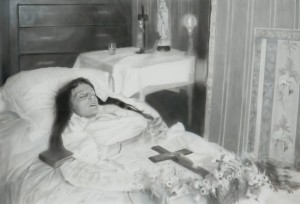
En şık kıyafetleriyle yatağına yatırılmış, Fransız bir genç kızın duvar kağıtlarıyla kaplı, dini objelerle dolu odasındaki ölü bedeninin fotoğrafında, figür ölmüşten çok uyur gibi.”
Daha ayrıntılı bilgi için x-ist’ten Ece Göymen ile görüşebilirsiniz.
ece@artxist.com
Açılış sponsorumuz SushiCo’ya teşekkür ederiz.
————————–
We had seen Engin Konuklu’s works; an artist born in 1990 in İzmir, for the first time last year at x-ist, in the exhibition titled Intersection V. Using nostalgic imagery for his Éternité exhibition, Konuklu examines the relationship between the viewer and the person being photographed in 19th century post mortem photographs.
“…In front of the lens, I am at the same time: the one I think I am, the one I want others to think I am, the one the photographer thinks I am, and the one he makes use of to exhibit his art(…) The photograph represents that very subtle moment when, to tell the truth, I am neither subject nor object but a subject who feels he is becoming an object: I then experience a micro-version of death: truly becoming a specter..”
Roland Barthes, Camera Lucida: Reflections on Photography
Post mortem photography which was mainly adapted as a grieving ritual in Europe and America in 19th century actually dates further back. The tradition of drawing dead priests in 15th century gained popularity with photography. Due to long exposure times needed in first cameras, dead members of the family appeared clearly in the photographs while other members were blurry. Techniques such as “hidden mother” were established in order to maintain the blurry effect. For the photographs to be focused on the children, mothers are hidden under linens (with their silhouettes still visible) helping their kids in maintaining a stable position. Many new rituals were formed regarding life and death with the invention of photography in the 19th century. Engin Konuklu expresses his views on death in the following manner:
“Death might bring gloom or joy to those who are left behind; according to Meursault it resembles emptiness and it means farewell in post mortem photographs. But what is death for the dead? It could mean reaching a state of heaven or hell to Christians and Muslims while it would not be of much concern for a Hindu born in an upper cast or one who is bound to be a priest .The word that defines best the idea of death to me is “éternité”. This word also embodies the idea of eternity while symbolizing a state with nothing post or prior to it as a French philosophy term. Death has the power to worry, intrigue but also disturb human beings. What inspired me to create a series focusing on death is “éternité”.; which is also the title of the first work in the series. In the photo where a young French girl is in bed wearing her best clothes, in a room covered by religious symbols and wallpaper, the figure resembles someone who is sleeping rather than dead..”
For further information contact Ece Göymen from x-ist.
ece@artxist.com