Erdal Ateş, Hacettepe Üniversitesi Ahmet Göğüş Sanat Galerisi 19 Şubat – 14 Mart 2014
Karşı Duvarlar
Her şey İskitler’de Çingeneler’in yaşadığı mahalledeki o harabe gecekondunun duvarları ile başladı. Dış duvarlar beni kendine bir paratoner gibi çekmişti. Beyaz badanalı duvarın altındaki renkli sıvalar ne kadar da büyüleyiciydi: Beyazın altında pembe, pembenin altında sarı, sarının altında yeşil… Muhteşem bir dekolaj eserdi. Çatısız, kapısız bu dört duvar eve girdim sessizce. Ve salondaki o duvar beni allak bullak etti: Simsiyah bir duvar ve dökük sıvalar… Siyah altında renkli katmanlar… Sanki bir modern sanatlar müzesinde bir şaheserin karşısındaydım. Nemli bir taşın üzerine oturdum. Uzun uzun seyrettim bu duvarı. Bir filmi izler gibi. Sıvaların birçok kısmı kabarık kabarıktı. Yağmur, rüzgâr, güneş; sıvaların, boyaların yapılarını değiştiriyordu. Kısa zamanda o kabarık yerler de düşecekti zemine. Bir kuru yaprak gibi. Sonra onların altındaki başka yerler kabaracak, çatlayacak… Ne kadar süre kaldım bu duvarın karşısında hatırlamıyorum. Görüntüleri imgelemime yükleyerek ayrıldım. Akşam eve geldiğimde hep o duvar vardı aklımda. Çok etkilenmiştim. Ve kararımı verdim: “Sıvaları dökük duvarların resmini yapacağım!” dedim kendime. Ertesi gün fotoğraf makinemi yanıma alarak bu gecekonduya tekrar gittim. Duvarları saatlerce izledim ve inceledim. Sonra bol bol fotoğraf çektim. O gün başka kavlak, dökük duvarları da fotoğrafladım. Çok hoşuma gitti. Bir çok duvardan kavlamış ince tabakaları söktüm ya da yere dökülmüş olanları torbama doldurdum. Bunları atölyemde uzun uzun inceledim. O duvarları büyüleyici yapan bu ince tabakalardı. Çok kırılganlardı. Tıpkı yumurta kabuğu gibi. O dönemde “bitpazarı nesneleri”nin resimlerini yapıyordum. Bıraktım. Duvarlara geçmiştim heyecanla. Denemeler yapıyordum her gün. Duvarlardaki dökük katmanları boyalarla yapmaya çalışıyordum. Özel elastiki boyalar, kumlu emülsiyonları üst üste kullanıyordum. Sonra sondan başa bunları metilen klorit, kimi keskin asitlerle ya da sıcak hava tabancasıyla yer yer ince tabakalar halinde sökmeye çalışıyordum. Atıl mekânlardan topladığım(söktüğüm) elektrik buatları ve kablo borularını da kullandım kimi çalışmalarımda. Poliüretan ve polistirenle farklı denemelere giriştim.
Duvarlar hayatıma girmişti. Varoş bölgelerdeki gecekondular ya da boşaltılmış atıl binaların duvarları karşısında buluyordum kendimi hep. Fotoğraflar çekiyordum, dökük sıvaları topluyordum. Terk edilmiş mekânlarda bazen tinerci ya da toplu halde uyuyan sokak köpekleri için istenmeyen ve beklenmedik bir misafirdim. Duvarlar için geldiğimi anlatabilir miydim onlara? İnandırabilir miydim onları? Birkaç kez de çökme tehlikesi olan yerlerde zor anlar yaşadım. Gezindiğim yerlerin büyük kısmı çökmüştü. Çökmeyen yerlerde usul usul dolaşırken yer, ayağımın altında çatırdamaya, oynamaya başlamıştı. Zorbela bir yerlere tutuna tutuna kurtulmuştum. Artık yüzlerce fotoğrafik duvar görüntüm vardı arşivimde. Ve hızla çoğaltıyordum görüntülerin sayısını. Kimi zaman da duvarları kameraya alıyordum.2008’de Hacettepe Üniversitesi Ahmet Göğüş Sanat Galerisi’nde “Karşı Duvarlar” adıyla ikinci sergimi açtım. Kimyasal maddeler satan yerlerden sürekli ürün numuneleri istiyordum. Atölyemdeki raflar envai çeşit boya ve kimyasal ürünlerle dolmuştu. Alanında yetkin bir çok kimyager ile tanışmıştım. Onları soru yağmuruna tutuyordum. Çoğu zaman da yoruyordum. Öğrendiğim tüm bilgileri Atölye Defteri’me geçiriyordum. Bir kaç tane kimya sözlüğüm vardı artık. Kullandığım kimi kimyasal ürün sağlık açısından çok tehlikeli idi. Maske takarak ya da atölyemin bahçesinde, açık havada kullanıyordum bu ürünleri. İkinci sergimdeki resimler heyecanlandırmıyordu artık beni. Farklı arayışlar içindeydim. Onların hepsini yok ettim(daha sonra açtığım dört sergimdekileri de!).Yok etmek, “yeni yaratımlar”a kışkırtıyor ve verimli kılıyordu beni.
Doğal katmanlar elde etmeliydim. Tıpkı duvarlardaki o dökük tabakalar gibi. Bu ince tabakaları elde etmek için -bir metrelik- bir makine tasarladım. Teflon bir bant –hız kontrol cihazının seçilmiş bir hızında- silindirlerde dönecekti. Ortada bir fırın bölümü yer alacaktı. Hazırladığım pekmez kıvamındaki sıvı emülsiyon makinenin baş tarafındaki rampaya dökülecek yürüyen bant bu emülsiyonu yayacak biraz ilerideki -“bıçak” dediğimiz- ağır ve düz bir demirin altından istenilen kalınlıkta geçerek ilerleyecekti. Fırın bölümünde emülsiyon pişerek diğer uca doğru ağır ağır yol alacak sonra bir kumaş gibi çıkacaktı.
Daha önce birkaç makine yapmış bir tanıdığıma(Ö. Abi’ye) konuyu açtım. “Olmaz,”dedi. “İşin içinden çıkamazsın.”
“Deneyelim,” dedim. “Yapabiliriz”. Zoraki, “Tamam,” dedirttirdim ona. Ve yaklaşık üç yıl sürecek zor bir sürece girmiş oldum. Makineyi dört ayda yaptık. Denemelere başladık. Sonuç alamıyorduk. Emülsiyon kalın gidiyor, pişmiyordu. Teflon banta yapışıp kalıyordu. Sökemiyorduk çoğu zaman bu emülsiyonu. İnce olduğunda da unufak oluyordu. Sabahtan akşama kadar denemeler yapıyorduk. Her şey için dünya kadar para gidiyordu… Görüştüğüm kimi boya kimyagerleri böyle bir sistemi bir apartmanın dairesinde yapamayacağımı, altından kalkamayacağımı söylediler. Bunun bir fabrika sisteminde gerçekleşebileceğini belirtiyorlardı. Bazı konularda bilgi almak için gittiğim kimi boya fabrikaları kapısından bile sokmadılar beni. Onları nasıl inandırabilirdim ki ressam olduğuma? Öyle ya, ressamsam oturup bilindik boyalarla bilindik resimler yapmalıydım.
Atölyem bir kimya laboratuvarını andırıyordu. Yüzlerce farklı ürün numuneleri dört bir yanı sarmıştı. Bütün ürünlerin yapısını öğreniyor, araştırıyordum. Bunları defterime geçiriyordum. Güzel sanatlar fakültelerinde –bizde olmayan!- “sanat ve teknoloji” dersinin ne kadar “önemli ve gerekli” olduğunu böyle zamanlarda anlamıştım.
Sonuç alamıyordum. Makine uzunluğu yeterli değildi. Pişme, buharlaşma gerçekleşmiyordu. Ayrıca tabaka olacak emülsiyonu da tutturamıyorduk. Onlarca kimyasal madde ile hazırlıyorduk emülsiyonu. Bütün maddeleri hassas terazi ile ölçüyorduk. Notlar alıyorduk. Üstümüz başımız emülsiyonla sıvanmış oluyordu hep. Bir yıl geçmişti ve tüm denemelerimde başarısız olmuştum. Ö. Abi, “Benden buraya kadar,”dedi üzülerek. “Boş ver. Eski resimlerine dön!”
“Yok,”dedim. “Devam edeceğiz. Yeni makine yapacağız altı metrelik…” Böylece yeniden sıkıntılı ve uzun bir döneme başladım. Atölyemin kimi duvarlarını yıktım. Büyük bir makine yaptık. Yeniden başladık denemelere. Dört bir taraftan –kargo ile- ürün numuneleri geliyordu yine. Her gün saatlerce kimyagerlerle konuşuyor, yeni bilgiler alıyordum. Eve geç vakit yorgun argın gidiyordum. İmgelemime yüklenmiş duvar imgeleri bana güç ve sabır veriyordu. Her başarısız denemede şunu söylüyordum kendime: “Bak, bir şey daha öğrendin!” Boş zamanlarımda ha bire dökük, kavlak duvarların peşindeydim. Toplu yıkım yapılan gecekondu bölgeleri çok heyecanlandırıyordu beni. Resim yapmayı özlemiştim. Bekliyordum. Farklı kalınlıklarda, geniş, ince tabakaları elde edecektim bir gün. Ve o gün harıl harıl resimler yapacaktım. İnanıyordum buna. Yılgınlığa düşmedim. Bu iş, denemeler iki kişi ile olabiliyordu. Bir kişi makinenin bir ucunda diğeri öbür ucunda. Teflon bant hareket halinde olduğu için iki kişi de sürekli aktif olmalıydı. Ö. Abi’nin gel(e)mediği günler, makinede denemeler yapamıyordum. Ama boş durmuyordum. Sürekli yeni bilgiler ışığında farklı denemelerin alt yapısını oluşturuyordum. Ö. Abi’yi atölyeme yaka paça götürüyor yeni denemelere girişiyordum. Yeni makine ile yer yer tabakalar elde ettik. Ama yeterli değildi. Evde geceleri eşim uyuyunca çektiğim fotoğrafları saatlerce inceliyor sonra o gün denemelerde yaşadığım sorunlar üzerine kafa yoruyordum. Sabah kahvaltıdan sonra atölyenin yolunu tutuyordum. Atölye darmadağındı. Yürümek bile zordu. Kimsenin atölyeme gelmesini istemiyordum. Hâlâ da istemem. Büyük tekneler, karıştırıcılar, büyük kimyasal maddelerin olduğu variller, deneme kapları… Yerdeki parkeler boyalarla kaplanmıştı. İki günde bir Ostim’e* gidiyordum makinenin bir parçası için. Makine işlevsel değildi. Doğru emülsiyonu yakalayamıyorduk. Çoğu zaman o darmadağın atölyenin ortasında oturuyor pürüzsüz beyaz duvarlara gözlerimi dikiyor ve düşlere dalıyordum. Kendimi bazen Balzac’ın Bir Yaratıcının Çektikleri romanındaki David Séchard’a benzetiyordum. Yoksa aynı yazarın Gizli Başyapıt’ındaki kendini yaratımın yok olumuna sürükleyen bir Frenhofer miydim?
Yeni denemelerden küçük de olsa sonuç almaya başladık. Sevindiriyordu bu küçük başarılar beni. Ö. Abi’yle bazen kavga ediyorduk. Kavga nedeni genelde emülsiyon karışımı üzerine oluyordu. Onun, bir ara işleri çıktı. Daha önce bilgiler aldığım bir boya fabrikasında çalışan kimyager S.’ye durumu anlattım. Hafta sonları benimle çalışabileceğini söyledi. Böylece yeni denemeleri S. ile sürdürdük. Sonuç almaya başladık. Her türlü elastiki ve kırılgan tabakalar elde edebiliyorduk. Bütün mesele emülsiyondaydı. Bir madde, birkaç gram eksik ya da fazla girse her şeyi altüst ediyordu. Emülsiyonun formülünü elde ettik. Her yeni karışımı(her rengi) bu formülasyona bakarak dikkatle yapıyorduk. Ayrıntılar çok önemliydi. Bazı renklerin(siyah ve koyu mavi) fırınlanması çok zordu. Ya emülsiyon teflon banta yapışıyor ya da renk değişiyordu. Bu renklere özel formülasyonlar geliştirdik. Nerede ise üç yıl geçmişti. Param suyunu çekmişti. Duvarlar, o çatlak, dökük, kavlak duvarlar bir bataklık gibi beni kendine çekmişti.
Emülsiyon yapımını, fırınlamayı S. ile yapıyordum. Bir de genç bir yardımcım vardı. Bize yardım ediyordu. Elde ettiğim farklı yapılardaki renkli tabakaları özel bir kimyasal madde ile tuval üzerine monte ediyordum.. Artık üst üste binen, derinliği olan katmanları elde etmiştim. Tabakaların renk şiddetinin (ışık haslığı) yüksekliği, değer farklılığı yaratırken beni bambaşka düşsel, masalsal bir atmosfere sürüklüyordu. Bu noktada gerçek duvarların o hüzünlü, dramatik yansıması yok oluyordu bende. Evet, o dökük, atıl duvarlar bana bambaşka resimsel bir dil yarattırdı. Bir anlamda o soyut duvarların –düşsel bir bakışla- soyutlanması belki de benim çalışmalarım.
*Ankara’da bir sanayi bölgesi.
Resim yapma edimim tam bir performans. Günün birinde –meraklı- izleyici karşısında da yaparım bu performansı belki. Böylece, “Nasıl yaptınız bu resimleri?” sorularını da bir nebze yanıtlamış olurum.
Sağlık sorunlarım nedeniyle artık tehlikeli kimyasal maddelerle çalışmayı bıraktım. Bir daha da çalışmayacağım. “Hayat mı, sanat mı?” tercihini ben “hayat”tan yana seçenlerdenim.
Çalışmalarımda en büyük desteği –kendisi de bir sanatçı olan- biricik eşim İlknur Ateş’ten aldım. Minnettarım ona. Ö. Abi’nin hakkını ödeyemem. Katkısı çok büyüktür. Geçirdiğimiz o zor ama güzel zamanları hep hatırlayacağım. Kısa süre çalıştığım S.’nin yardımlarını da unutamam.
Resim yaparken “yapayalnız” olurum ve imgelemimdeki “duvar görüntüleri”, ellerime rehberlik yapar onları devindirir.
Resimlerimi şimdilik yok etmiyorum. Ama zaman ne gösterir bilemem…
Mart 2013-Ankara
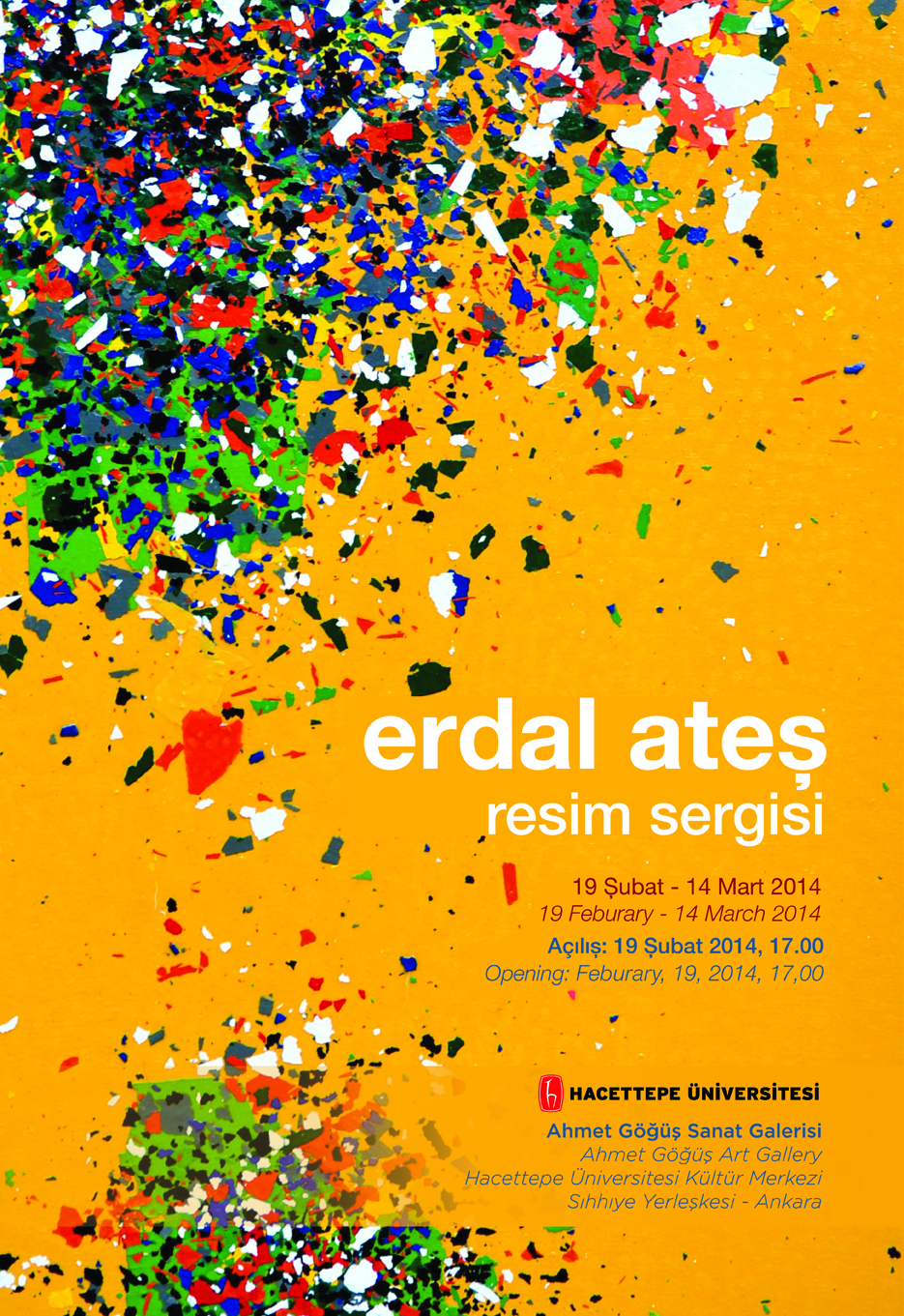
‘OPPOSİTE WALLS’
It all began with the walls in the ruins of the Gypsy squatters district in Iskitler. The outside wallsattracted me like a magnet. How fascinating the colored plasters were under the whitewashed wall:pink under white, yellow under the pink, green under the yellow…It was a magnificent study of décollage. I silently entered the four wall house without a roof or doors. And the wall in the salon bewildered me: a jet black wall and crumbling plaster…colored layers under the black..it was as if I was in front of a masterpiece in a modern art museum. I sat on a damp stone. I stared at the wall for a long time as if I was watching a film. Much of the plaster was bulging. Rain, wind and sun were changing the structure of the plaster and paint. Soon those swollen places would fall to the ground. Just like a dry leaf. Then the other places under the swellings would bulge and crack..
I’m not sure how long I stayed in front of that wall. I recorded the images in my imagination and left. When I came home in the evening that wall was always on my mind. I was so affected by it. Then I made a decision: “I’m going to do a painting of those walls with falling plaster!”, I said to myself. The next day I took my camera with me to that squatters house. I watched and examined the walls for hours. Then I took a lot of photos.That day I shot other crumbling, dilapidated walls. I was pleased. I peeled off the thin, flaky layers of some of the walls or those that had fallen to the ground and put them in a bag. I examined them for a long time in my atelier. These thin flakes were what made the wall so mesmerizing. They were so brittle. Just like egg shells. At that time I was making paintings of ‘flea market objects’. I stopped that. I excitedly passed on to walls. I was experimenting every day. I was trying to recreate the flaking layers with paint. I was using elastic paints and sandy emulsions one on top of the other. Then I was trying to remove them in thin layers with methylene chloride, some strong acids or a hot air gun. In some of my efforts I used the electric junction boxes and cable pipes I had collected from deserted locations. I tried different experiments with polyurethane and polysterene.
Walls had entered my life. I always found myself in front of walls in the squatters houses or in
deserted desolate buildings on the outskirts of town. I was taking pictures, collecting broken off plaster. Sometimes in those deserted areas I was the unwanted or unexpected guest of glue sniffers or groups of sleeping street dogs. Could I tell them that I had come for the walls? Could I have convinced them of my aim? A few times I had difficulty in places that were in danger of collapsing. Many of the places I visited had collapsed. Those places that hadn’t collapsed would crack and move under my feet. Once I was saved from a near fall by just barely holding onto some stabler structures. Now I had hundreds of photographic images of walls in my archives. And the number continued to increase rapidly. Sometimes I would shoot videos of the walls.
In 2008, I opened my second exhibition called “Opposite Walls” at the Hacettepe University
Ahmet Göğüş Art Gallery.
I was constantly requesting sample products from places selling chemical materials. The shelves of my atelier were stocked with countless paint and chemical products. I met many competent chemists. I asked them so many questions that I would tire them out. I wrote all the information I had learned in my atelier notebook. I even acquired a few chemistry dictionaries.
Some of the chemical materials I used were hazardous to health. I would put on a mask and use these products outside in the yard of my atelier.
The paintings in my second exhibition did not excite me any more. I destroyed all of them and
even the paintings from the four exhibitions that followed. Destroying them stimulated ‘new
creations’ and made me more productive I needed to produce natural layers; just like the crumbling layers on the walls. I designed a machine a meter long to produce those thin layers. A teflon belt would roll on cylinders at a speed set by the speed control device. There would be an oven section in the middle. The liquid emulsion that I prepared that had the consistency of molasses would be poured on the ramp at the front of the machine. It would spread out on the conveyor belt. Then the emulsion would pass under the ‘blade’ made of heavy and smooth iron which would make it the proper thickness. In the oven section the emulsion would bake and slowly make its way to the other end and would come out like a piece of fabric.
When I talked about my idea to a friend (O) he said, “It won’t work. You won’t be able to cope with it.”
“Let’s try it”, I said. “We can do it.” I forced him to say ok. That’s when I began a difficult process that lasted about three years.
We constructed the machine in four months. We started the experiments. We couldn’t get any
results. The emulsion would be thick and not bake. It would get stuck onto the teflon belt. We
couldn’t get it off. When it was thin, it was too small. A lot of money was spent on everything… Some paint chemists said that I couldn’t set up such a system in an apartment and that it wouldn’t work. They said it would be better to try doing it in a factory. So I visited some paint factories to get some information about certain subjects but they wouldn’t even let me through the door. How could I convince them that I was an artist? Yeah, if I were an artist I should use conventional paints to make conventional paintings.
My atelier resembled a chemistry lab. It was filled with samples of various products. I learned
and researched about all the products. I would keep track of everything in my notebook. At these times I realized how “important and necessary” it was to have “art and technology” classes ( nonexistent in our school) in Fine Arts Faculties.
I wasn’t getting any results. The machine wasn’t long enough. The baking and steaming didn’t
happen. We couldn’t come up with the emulsion that would make the layers. We prepared
emulsions with many kinds of chemical substances. We would measure these substances with
sensitive scales. We took notes. We were smeared from head to toe with emulsion. One year had passed and I had been unsuccessful in all the experiments. O. said sadly, “There’s nothing more I can do. Forget about it. Go back to your old paintings.”
“No”, I said, “we’re going to continue. We’ll make a new machine, six meters long…” Thus I began a new problematic and long period . I tore down some walls in my atelier. We made a large machine. We started the experiments again. Product samples were coming from everywhere by cargo again. Every day I would talk to chemists and get new information. I would come home worn out. The wall images in my imagination would foster my strength and patience. After each unsuccessful experiment I would say to myself: “Look, you learned something else!” In my free time I went after crumbling, dilapidated walls. Seeing the squatters regions being torn down, excited me. I missed painting. I was waiting. One day I would produce different widths of wide, thin layers. That day I would paint non-stop. I believed this. I was not discouraged.
Two people could do this work and the experiments. One person would be on one end of the
machine while the other person would be at the opposite end. While the teflon belt was moving, the two people would constantly be active. When O. didn’t or couldn’t come I could not experiment with the machine. But I was busy. I was constantly preparing the infrastructure for different experiments in light of the new information I found. I was trying new experiments while O. was busy elsewhere. We produced some partial layers. But it wasn’t enough. At nights while my wife was asleep I spent hours examining the photos I took; then I would go over the problems I had faced during that day’s experiments.
After breakfast every morning I would go to the atelier . The atelier was a mess. It was difficult to walk around in it. I didn’t want anyone to come to my atelier. I still don’t. Large tins, mixers, barrels full of chemical substances, experimental containers… paint had covered the wooden floors. Every other day I would go to Ostim* for a part for the machine. The machine was not functional. We couldn’t get the emulsion right. Most of the time I would sit in the middle of that messy atelier staring at the smooth white walls and daydream. Sometimes I felt like David Séchard in Balzac’s novel Lost Illusions. Or was I Master Frenhofer in the same author’s The Unknown Masterpiece who dragged his creation to destruction? We began to see results, little that they were, from our experiments. These little successes would make me happy. Sometimes I would fight with O. It was usually because of the emulsion mixture. O. had some work to do for a while. I explained the situation to S. who was a chemist who worked in a paint factory. He said that he could work with me on weekends. I then continued working with S on new experiments. We could produce all kinds of elastic and brittle layers. The key was in the emulsion. If there was one gram
difference in one substance everything was ruined. We produced the formula for the emulsion. We made each new mixture (each color) by carefully consulting this formula. Details were so important. Some colors (black and dark blue) were difficult to bake. Or the emulsion would stick on the teflon belt or the color would change. We developed special formulas for these colors. Almost three years had passed. My money was finished. Walls, those cracked, crumbling walls attracted me like a quicksand in a swamp.
I made and baked the emulsion with S. I also had a young assistant. He would help us.I would
mount the different structures of colored layers I produced on a canvas with a special chemical substance. I now produced layers on top of each other that had depth. Creating value differences in the high intensity of the layer colors evoked in me an odd, surreal fairy tale like atmosphere . At this point the sad dramatic reflection of the real walls ceased to exist for me. Yes, those crumbling, stagnant walls had created an odd, pictorial language. In some sense, the abstraction of those abstract walls-from a surreal point of view-were perhaps my work.
The act of making the paintings was a real performance. Maybe one day I can do this performance for curious spectators. Thus, I will have sort of answered the question: “How did you do these paintings?”.
I had to stop working with dangerous chemical substances because of health problems. I will never work with them again. Which would I choose, “Life or art?” I would be among those who would choose life.
*An industrial zone in Ankara
The biggest support for my work was from my wife, Ilknur Ates, who is also an artist. I am
indebted to her. I can never repay O. for his tireless efforts. I will always remember those
wonderful, difficult times we spent together. I can’t forget S.’s help for that short period.
While painting, I will be “all alone” and the “wall images” in my imagination, will be the guide that impels me.
For the time being I am not destroying my paintings. But I don’t know what the future will bring…
March 2013-Ankara