ICOM Almanya, Uluslararası Müzeler Konseyi, yılda bir kez çıkardığı dergide Bedri Baykam’ın “Batı ve Dünyanın Geri Kalan Kısmı, Aradaki Farkı Bulun”* başlıklı Almanca makalesini yayınladı. PDF’de 60-62. sayfalar arası görebilirsiniz. Makalenin İngilizcesini de aşağıda bulabilirsiniz.
Dear ICOM member friends,
It’s a pleasure to be together with you with this article. I will be frankly open and I believe that this dialogue is very important for all of us! So, thank you for making it happen!
We are going through some uncertain times where we can’t really see in front of us what the future stores for the world during these heavy long months, turning into years now.
But there is also another issue, in the midst of these scary days there are countries that do not need the pandemic to be in a crisis in their art world! Lacking funds, lacking free regulations for free spirited artists working with a democratic open mind…
THE WESTERN ART WORLD AND THE OTHERS
This is a subject I have been writing and giving speeches and interviews since 1984, the year I had distributed a very provocative and incisive manifesto in front of the San Francisco Museum of Modern Art, criticizing the fact that almost all their selections of artists were from western countries and that this had been an ongoing routine for most of western museums, taking for granted that nothing interesting would happen outside their zone. Here there is no UEFA or UN that can interfere in the matter.
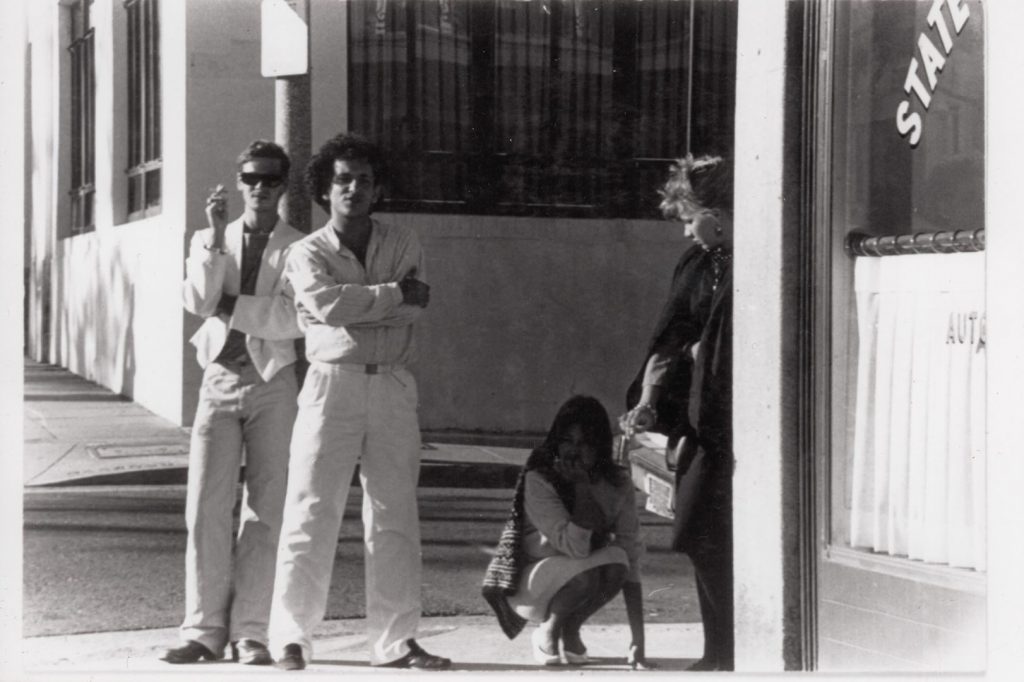
When I distributed “The San Francisco Manifesto”, I was 27 years old and that was 37 years ago. I had no idea that 34 years later it would be included in a historical book published by Penguin Books, “Why We Are ‘Artists’? 100 Art Manifestos” in London. To my nice surprise many world-renowned art historians and critics were taken by those ideas and they started looking at the issue very differently since then. Some of those names where Peter Selz, Donald Kuspit, Achille Bonito Oliva, and many other important names were added to that list few years later such as Edward Lucie Smith, Harry Bellet, Robert Morgan and so on. My main article including the manifesto “Modern Art History is a Western Fait Accompli” in 1985, was republished in 1989 in Paris and distributed as another major harsh manifesto in the form of a newspaper at the opening of the exhibition “Les Magiciens de la Terre” at the Centre Pompidou.
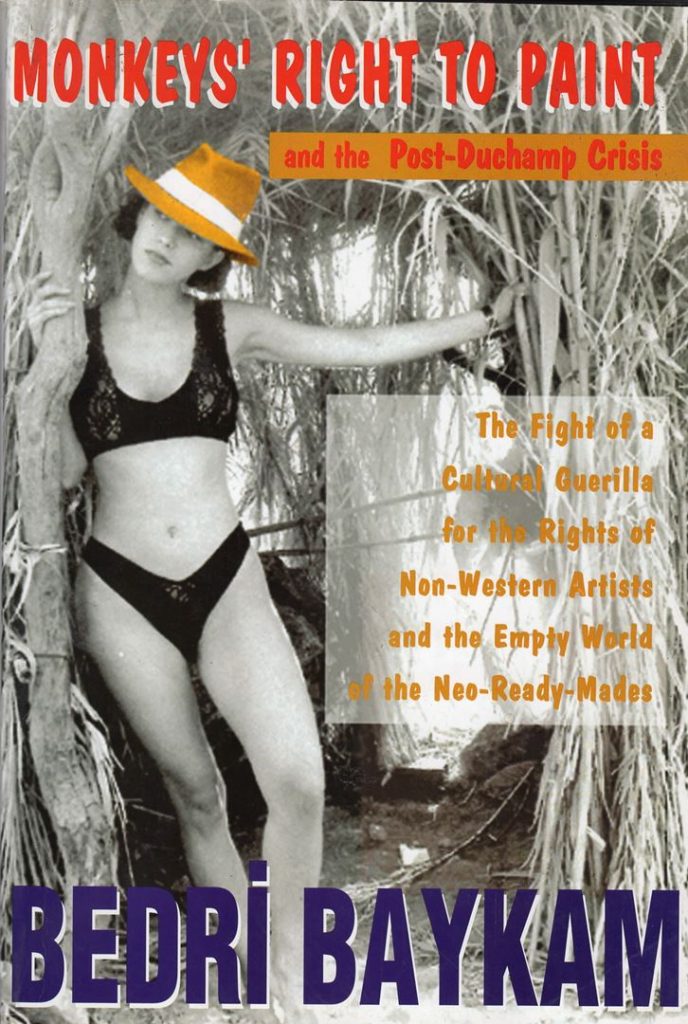
That whole story turned into a pioneer book “Monkeys’ Right to Paint” (1994) going into the roots of modern and contemporary art and deciphering that most of them were taken from Eastern and Southern countries and that modern art was not solely a western battlefield.
So, the result is that for long years most western museums and art historians in their important exhibitions kept showing over and over the same artists with sometimes different works and it all became a repetitive boring tour for the art lovers. So nowadays art lovers most of the time are seeing very similar shows or very similar genealogical cultural descendants.
So, what happened really since 1984? I know that my rebellious outburst was even before multiculturalism became in vogue in the 90s. What happened was that with the speeding and the internationalization of the biennials, some exceptions could be used as some sort of “practical make up” to justify the word “international” in those shows. So, we could see for example Anish Kapoor, Shirin Neshat, or Ai Weiwei. Yes, now things statistically are not as bad as they were in the 70s or 80s or even 90s maybe, but to be honest only a tiny bit has changed. When you look at most of the exhibitions the retrospectives list, the major publications and curated shows, you still see the same dominating western names over and over.
There is also always another important pressure coming to museums from important galleries and auction houses that want more and more shows for the names whose prices they want to hike. I feel on the other hand that galleries are free to promote whatever nationality or name they want but that museums have to be more distant and neutral and cool and do more international research and digging to come up with a closer to reality agenda for the world. Well maybe it’s just wishful thinking but this is how we would like to feel and what we would like to see from our group of countries. Meanwhile, we cannot forget that often museum directors are under the pressure of coming up with shows that would guarantee a great box-office. So, it’s a fact that they cannot move always as freely as we think. Museum trustees or Ministries of Culture should be made aware that this attitude does not fit the spirit that museum should carry.
Do you know why we need that? The result is that when you compare the careers of those western artists with their colleagues from other countries, you see that western names are so far ahead in their “prestige and prices”; actually, here fame and money is not the matter. Let’s rather say equality and the importance and influence carried by the artist matters. Money is just another illusion of the seal of superiority. But “they” should know that, those who are not allowed to compete in a race, don’t lose that race.
Because trust me, that there are very many artists who are doing some very important career works and not just “Bon pour l’orient”.
HUMAN RIGHTS AND FREEDOM OF SPEECH ISSUES
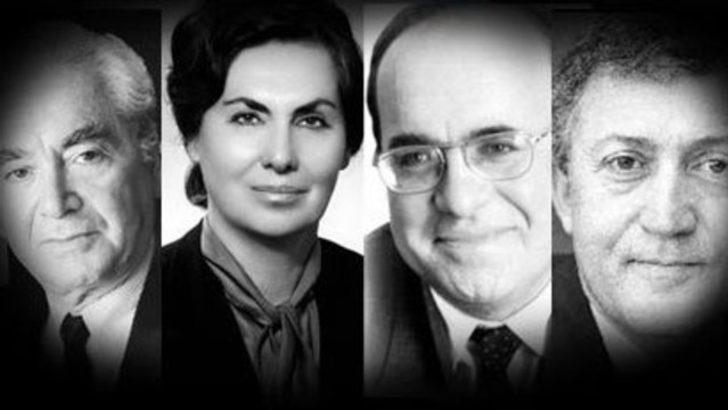
Some of the non-western artists do not encounter justice in their own countries either because they have to face censorship and the risks of being jailed, losing everything. I don’t want to give more details but several of my fellow democratic writer friends were killed and 10 years ago, historical names such as Muammer Aksoy, Uğur Mumcu and ex-Minister of Culture Ahmet Taner Kışlalı. I myself was stabbed almost to death in 2011 and I happened to survive with a miraculous operation. I have many other friends that were in jail for 7-8 years risking lifetime in prison and I went through the same dangers. In Turkey, for the past 10 years, I have been one of the three spokespersons of the “Artists’ Initiative” (Sanatçılar Girişimi) together with legendary poet Ataol Behramoğlu and theatre stage actor Orhan Aydın. Also, we have to fight constantly against middle age minds who try to take Turkey out of the path of Atatürk, the founder of modern Turkey.
Forgive the analogy but if I was to compare western and non-western artists supposedly in a race they would participate in, I would say that while the western artists have had the best trainers, the best food, the best vitamins, the lightest shoes, the non-western artists were deprived of water and food while there were big stone pieces and steel metal heavy shackles attached to their ankles before the race started. How else can I make the comparison, when talking about a country who has zero museum of modern and contemporary art belonging to the state, and almost 0 funds for collecting, while artists are called “all sorts of (bad) names”, sometimes torn in pieces in front of the public opinion instead of being encouraged, unless they are direct cheering voices for the conservative power structure!
THE UNFORTUNATE DESTINY OF HAGIA SOPHIA
Also, unfortunately we encounter another type of carelessness and even lack of respect towards the past of other cultures. The case of Hagia Sophia has been very much talked about in the past year, when President Erdogan under the mesmerized eyes of the world public opinion inaugu-rated this sanctuary as a mosque again.
As we all know, “opening Hagia Sophia to worship” has been a topic that was constantly brought to the agenda for political vote interests of the Turkish right-wing parties that turned this case into a sovereignty issue (!) for long years!
As the President of the Turkish Artist Association, together with my Executive Committee we did our best to try to oppose this “fait accompli” which unfortunately turned a UNESCO world herit-age universal museum as well as into a mosque where Muslims would come again to pray. The pressure had grown within the coalition partner of AKP, the Nationalist Movement Party (MHP). What a pity that such internal political affairs would hit like a heavy sword onto the heart of history! The issue is that Istanbul is the city of the world with the most mosques, we have al-ways had more space available than would be needed. However, we can say that it didn’t look good towards members of all the other countries’ believers who obviously were shocked and didn’t appreciate this act perceived as rude by them. Also, this attitude very much even against the behavior pattern of the Ottoman Empire which let all other ethnicities and religions live peacefully on its land without putting any pressure on them and that had also welcome the Jew-ish Sepharades in exile from Spain some 500 years ago. Honestly how can we judge the toler-ance of today’s attitude, knowing that for long centuries, Christian and Orthodox people had worshiped in this wonderful temple…
It’s neither possible to understand nor to digest the renouncement to a wonderful decision taken by our great leader Mustafa Kemal Atatürk, 86 years ago, turning Hagia Sophia into a mu-seum open to humanity.
Isn’t this all about the respect to other histories, other lifestyles?
DEMOCRATIC SOLIDARITY WITHIN THE ART WORLD
Because of these facts, our agenda of the list of anti-democratic happenings, changes every day. Such is the reality of life under pressure! Our resistance to fascist attitudes and intolerance has to stay alive and well no matter how worse the situation gets or how bad the socio-political weather is. Art, journalism and writing are couple of the major tools that become effective for this purpose boldly and frankly. On the other hand, everywhere in the world artists and art professionals fight against dictatorships, wars, racism, growing femicide and violence against refugees.
I have been the instigator of World Art Day (WAD) in 2011: My proposal as the President of the Turkish Artist Association (UPSD) for turning April 15, Birthday of Leonardo da Vinci, into WAD, was accepted unanimously at the General Assembly of International Association of Art (IAA-Official partner of UNESCO) in Guadalajara, Mexico. After all the celebrations that ensued worldwide for years, we took another step in 2018. I had become World President of this organization and we suggested to UNESCO’s General Director and Executive Committee to have this special day as one of the International UNESCO Days.
This finally concretized in 2019. WAD is able to give to all artists from around the world and impression of fraternity and equality and the feeling of being heard. It also gives them real protection up to a certain extent against all the enemies of arts freedom and democracy. Because around WAD at least they are reminded of the international links and strong community of art worldwide, ready to move to unite for a solidarity when needed. And we did use this power solidarity even to save lives like the poet and artist Ashraf Fayadh who had been sentenced to death in Saudi Arabia.
THE WORLD MAP CAN SHRINK WITH COVID TIMES
Another action that also pleased several world artists that got acquainted with it, was my “Art History Map” of the world. Seeing all the links between world artists starting from cave times up until today, International artists from so many different countries become aware of their own presence and their self-confidence grows as well as their respect for their own land’s realities.
Now if this map covers the history of art up until 2019 and there’s a black line at the end of that year with the Covid abyss. When history will be recorded for the times after Covid, nothing will be the same and maybe we will have to remember those periods as “before and after Covid”.
Can we use the “after covid era” to restart a new approach to the serious cooking of history and art history beyond frontiers, also accepting “other nations” without prejudice and stereotyped images. I insist that I’m not just talking about the art history but just history in general. Again, I will not elaborate on it here but for instance Europeans don’t know that one of the most important 68 movements was lived for years in Turkey and those years have had much more impact on the country than Germany or France.
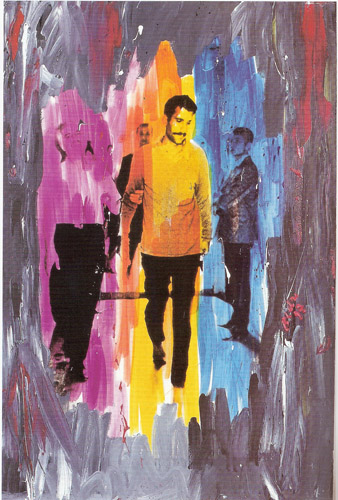
The legendary Turkish leader of 1968, Deniz Gezmiş, might become much more important than even Daniel Cohn Bendit himself in your eyes, if you only could get to know him. Who knows, maybe we will make a profitable use of the Covid times by having a more philosophical and equal consideration about life, the world and all its equal inhabitants… Art can end up benefitting universally from the disappearance of geographical distances. It’s up to all of us to make that become true!