A thought of sight, Özgür Uçkan
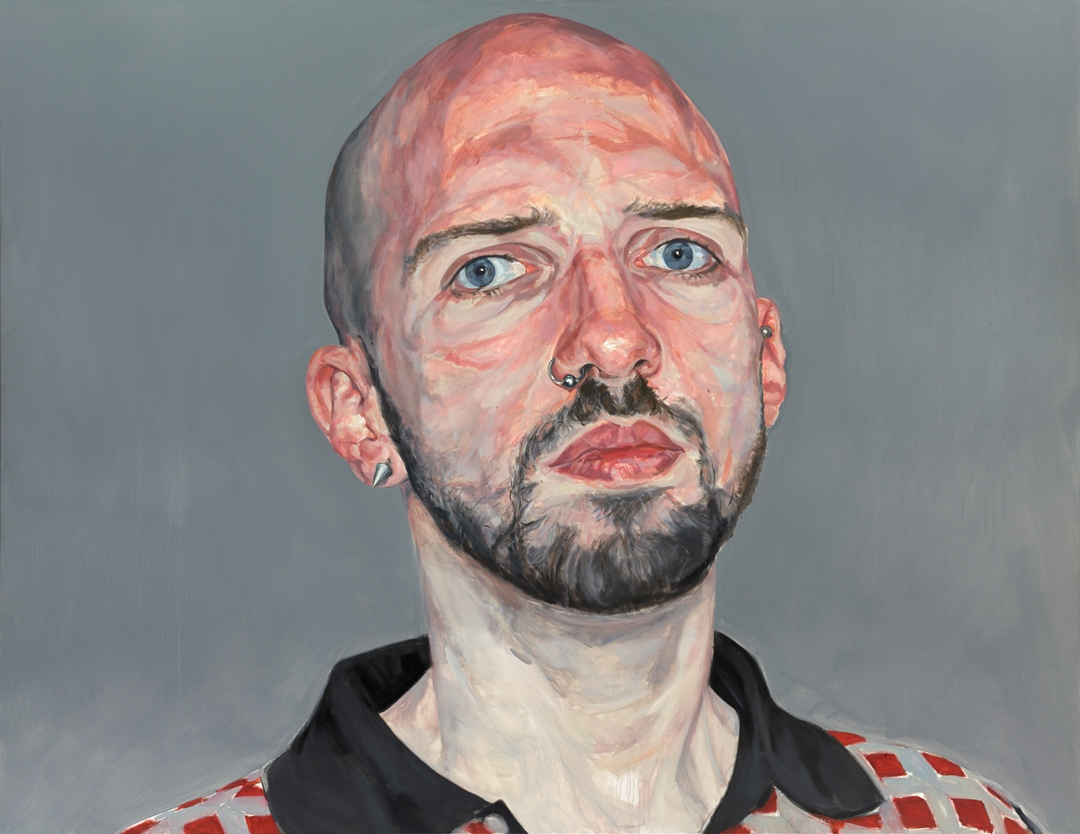
Timur Çelik is known for his big-sized, hyper-realistic portraits. Faces in his portraits acquire, while coming closer to us with a hyper-perception of their realness, further profoundness like a deep abyss that gulps us down with a kaleidoscopic play of rust, asphalt and every other urban color.
These faces act much like a doorstep: while venturing forward through that doorstep into the inmost parts of someone, some anonymous one, the faces look outward from their own inside and talk to you…
Timur Çelik’s paintings are, indeed, a threshold; that is, the threshold of reality which resonates both below and above the threshold of perception and thus falls within the reach of our sight.
“The spirit’s perception”…
Big size does not necessarily refer to the size of the works; in any case, dimensions on canvas do grow larger: Because everything is given in close- up, and this, in turn, brings closer the reach of the sight, slows down and deepens it, and furnishes perception with a greater power of penetration.
These paintings should be better called “hyper-perception-thresholds” rather than “hyper-real”. Because the profoundness of reality can be only captured with a depth-enquiring perception. The perceived, the very reality of spirit… A capability of our sight, that is, the power of the eye to intuit, sense and contemplate, has been getting increasingly lost for quite some time…
Maurice Merleau-Ponty says “everything I see is in principle within my reach, at least within reach of my sight, and is marked upon the map of the ‘I can.’” and adds, “Painting awakens and carries to its highest pitch a delirium which is vision itself, for to see is to have at a distance; painting extends this strange possession to all aspects of Being” (Maurice Merleau-Ponty, “Eye and Mind” in The Merleau-Ponty Reader ed. by Ted Toadvine and Leonard Lawlor, Northwestern University Press, 2007, 354, 357). With each day, however, the relationship between sight and reachability which Merleau-Ponty emphasizes, that is, the possession of Being on the map of the visible, the richness of possibilities to penetrate and conquer, is dying.
We are living in a fast world. Indeed, it would be quite appropriate to call this world a “speed-world” where everything is in perpetual acceleration. This is a world which transforms our perception of space and time under the dominance of a science and technology and is wittingly called the “logic of speed” (dromology) by Paul Virilio. The world of flow, movement and speed…
“It was believed that freedom of movement led to infinite freedom. I have shown it’s not true: there’s a dictatorship of movement beyond a certain limit.
We pass from freedom of movement to tyranny of movement” (Paul Virilio & Sylvère Lotringer, Pure War, Semiotext(e), 1997, 74).
In such a world, it is getting increasingly difficult for the sight to “stand still” within its own space and time and be able to move within “duration”, that is, to slow down within its own freedom of movement and thus penetrate further beyond the surface reaching deep down inside and capture the being in its utmost variety, without surrendering to the motion (speed) of movement. The space-time that is peculiar to painting is one of rare opportunities where the map of possibilities still has a chance to survive In Timur Çelik’s both portraits that dwell, not simply on the faces or at the surface, but beyond the threshold of the face, and suburban landscapes that reflect an uncanny mist of humanless solitude, there always exists a spirit which opens up itself and readily invites the onlooker to a lively perception.
Your sight sniffs the air at this very threshold and then moves forward and deeper inside. In the rust of faces whose possible would-be expressions are erased when caught in a wider shade of time, in the mist of lonely streets, or in the depression of an old discarded police horse, or yet in the suspended moment of space that is reflected from the mirror of a light bulb, there lingers a spirit that cannot be captured unless the threshold of these paintings is carefully climbed over to get to the other side.
This spirit can be only conquered with a sight that would penetrate “all aspects of Being”, and Timur Çelik’s paintings agitates your sight to possess that spirit.
Sight is thought. By our body we are forced into thinking within the movement of our sight and this is the reason why images in general accompany thought.
The thought of sight is one which is not “rationalist” and cartesian, that is, it does not dominate emotions, intuition and perception, but rather “labors” alongside them. Painting facilitates a thought of sight that can capture the deep essence behind the surface by relying on light, color, texture, paint layers and, not at least, the movement of the painting body. Indeed, a painting does not “picture” anything, nor does it represent anything, either. A painting just creates something that would not be there otherwise.
Faces, streets, and living or nonliving things alike that are caught in the spirit times of Timur Çelik’s paintings are beings that open up their reality to sight, that is to feelings, intuition and perception only while you are looking at them.
It is not for nothing that they are embedded in a Berlin atmosphere. Karl Krauss called Vienna of the last century a “city of decadence”. Berlin, on the other hand, is rather a “city of post-decadence” in this century. A utopia, or rather, a dystopia, a “no-mans-land” that registers, with its walls or lack of walls, the boundaries of this century upon the collective memory of humankind…
Art has always been one of the most basic means of knowing. But it is a reality of spirits that we access while looking at these paintings. In pain, scared, hopeless, smart, ironic, evil, mischievous, agile, weary, misty,variable, profound, crowded, close-up, distant, but alive, real souls…
There, they await you “on your sight’s map of the ‘I can’”…
………………………………….
Bir bakış düşüncesi, Özgür Uçkan
Timur Çelik, büyük boyutlu, hiper-gerçek portreleriyle tanınıyor. Portrelerindeki yüzler, gerçekliklerinin hiper algısıyla yakınlaşırken, pas, asfalt ve diğer şehir renklerinin oyunuyla içine çekildiğimiz birer kuyu gibi derinleşiyor.
Bu yüzler birer eşik: bakışınız o eşikten içeriye, bir insanın, herhangi bir insanın derinliklerine adım atarken, yüz kendi içinden size bakıyor, sizinle konuşuyor…
Timur Çelik’in resimleri birer eşik. Algı eşiğinin altında ve üstünde titreşerek bakışımızın menziline giren hakikatin eşiği.
“Ruh algısı”…
Büyük boyut, sadece işlerin boyutlarıyla ilgili değil; her durumda tuvaldeki boyutlar büyüyor: Çünkü her şey yakın-plan ve bu, bakışın menzilini yakınlaştırıyor, bakışı yavaşlatıp derinleştiriyor, algıya nüfuz etme gücü veriyor. Bu resimlere “hiper-gerçek”ten çok “hiper algı eşikleri” demek daha doğru olur. Gerçekliğin derinliği ancak derinlemesine bir algıyla kavranabilir çünkü. Algılanan, ruh gerçekliği… Bakışımızın artık kaybetmeye yüz tuttuğu bir yetenek, gözün sezme, hissetme ve düşünme yeteneği…
Maurice Merleau-Ponty, “bütün gördüklerim ilke olarak ulaşabileceğim bir yerdedir, hiç değilse bakışımın ulaşabileceği bir yerde, ‘yapabilirim’in haritasında saptanmış olarak” der; ve ekler: “Resim, görüşün kendisi olan bir sayıklamayı uyandırır, en yüksek gücünü verir ona, değil mi ki görmek uzaktan sahip olmaktır ve resim bu garip sahip oluşu Varlık’ın bütün yönlerine yaymaktadır.” (Göz ve Tin, Metis, 1996, 33, 38-39) Merleau-Ponty’nin dikkat çektiği bakış ve erişim ilişkisi, yani görünür olanın haritasında bakışın varlığa sahip olma, nüfuz etme imkânlarının zenginliği, giderek köreliyor.
Hızlı bir dünyada yaşıyoruz. Aslında her şeyin giderek daha da hızlandığı bu dünyaya, “hız-dünya” desek yeridir. Paul Virilio’nun “hız mantığı” (dromologie) adını verdiği bir bilim ve teknolojinin egemenliğinde, zaman ve mekân algımızı sezdirmeden dönüştüren bir dünya bu. Akışın, hareketin ve hızın dünyası. “En temel özgürlüğün, hareket özgürlüğü olduğu söylenir hep. Doğru, ama hız özgürlüğü değil. Aşırı hızlı gittiğinde kendinden tamamen soyulursun, tümüyle yabancılaşmış bir hale gelirsin. Bir hareket diktatörlüğünden söz edilebilir… Hareket özgürlüğünden hareketin tiranlığına geçiyoruz…” (Paul Virilio & Sylvère Lotringer, Pure War, Semiotext(e), 1997, 74).
İşte böyle bir dünyada, bakışın kendi zaman ve mekânı içinde “durup”, “süre” içinde hareket ederek, yani hareketin hareketine (hıza) teslim olmadan kendi hareket özgürlüğü içerisinde yavaşlayarak yüzeyin ardına, derinliğe nüfuz etmesi, varlığı çeşitliliği içinde kavraması giderek zorlaşıyor. Resmin kendine özgü zaman-mekânı bu imkânlar haritasının hala hayat bulduğu ender boyutlardan biri.
Timur Çelik’in, ifadesi yüzde, yüzeyde değil, yüz eşiğinin ardında yatan portrelerinde olsun, insansız yalnızlığının sisinde tekinsizliğini ifade eden kenar mahalle peyzajlarında olsun, kendisini algıya açan bir ruh var. Bakışınız bu eşikte adımlarını tecrübe ediyor ve içeriye, derinliğe giriyor.
Takınabilecekleri ifadelerden geniş zamanda yakalanarak arınmış yüzlerin pasında, yalnız sokakların pusunda, yılkıya çıkmış bir polis atının bezginliğinde, bir ampulün aynasından yansıyan mekânın durağan anında, bu resimlerin eşiğinden geçmeden yakalanamayacak bir ruh var.
Bu ruh, “Varlık’ın bütün yönlerine” nüfuz edebilecek bir bakışla yakalanabilir ancak ve Timur Çelik’in resimleri bakışı ruha sahip olmaya kışkırtıyor.
Görüş düşüncedir. Beden tarafından bakışımızın hareketi içinde düşünmeye itiliriz ve düşünceye genellikle imgelerin eşlik etmesi bu yüzdendir. Görüş düşüncesi, “rasyonalist” ve Kartezyen olmayan, yani duygu, sezgi ve algı üzerinde tiranlık kurmayan, tersine onlarla birlikte “çalışan” bir düşüncedir. Resim, ışığın, rengin, dokunun, boya katmanlarının ve elbette resmeden bedenin hareketine tutunarak yüzeyin ardındaki derinliğe açılabilen bir bakış düşüncesini mümkün kılar. Resim, aslında bir şeyi “resmetmez”, temsil ettiği bir şey yoktur. Resim, başka türlü orada olamayacak bir şeyi var eder.
Timur Çelik’in resimlerinin ruh zamanında yakalanan yüzler, sokaklar, canlılar, cansızlar, ancak o resimlere bakarken görüşe, yani düşünceye, duyguya, sezgiye ve algıya hakikatini açan varlıklar. Bu varlıkların bir Berlin havasıyla kuşatılması ise boşuna değil. Karl Krauss, geçen yüzyıl döngüsünün Viyana’sı için “dekadans şehri” derdi. Berlin ise bu yüzyıl döngüsünün “dekadanssonrası şehri”. Duvarıyla da duvarsızlığıyla da bu yüzyılın sınırlarını insanlığın belleğine çizen bir ütopya, bir distopya, bir “no-mans-land”…
Sanat her zaman en temel bilme biçimlerinden biri olmuştur. Bu resimlere bakarken kavradığımız ise bir ruh gerçekliği. Acılı, korkmuş, umutsuz, zeki, ironik, hin, kıvrak, bezgin, tekinsiz, sisli, değişken, derin, yalnız, kalabalık, yakın, uzak, ama canlı, gerçek ruhlar…
Orada, “bakışınızın ‘yapabilirim’ haritasında” sizi bekliyorlar…